

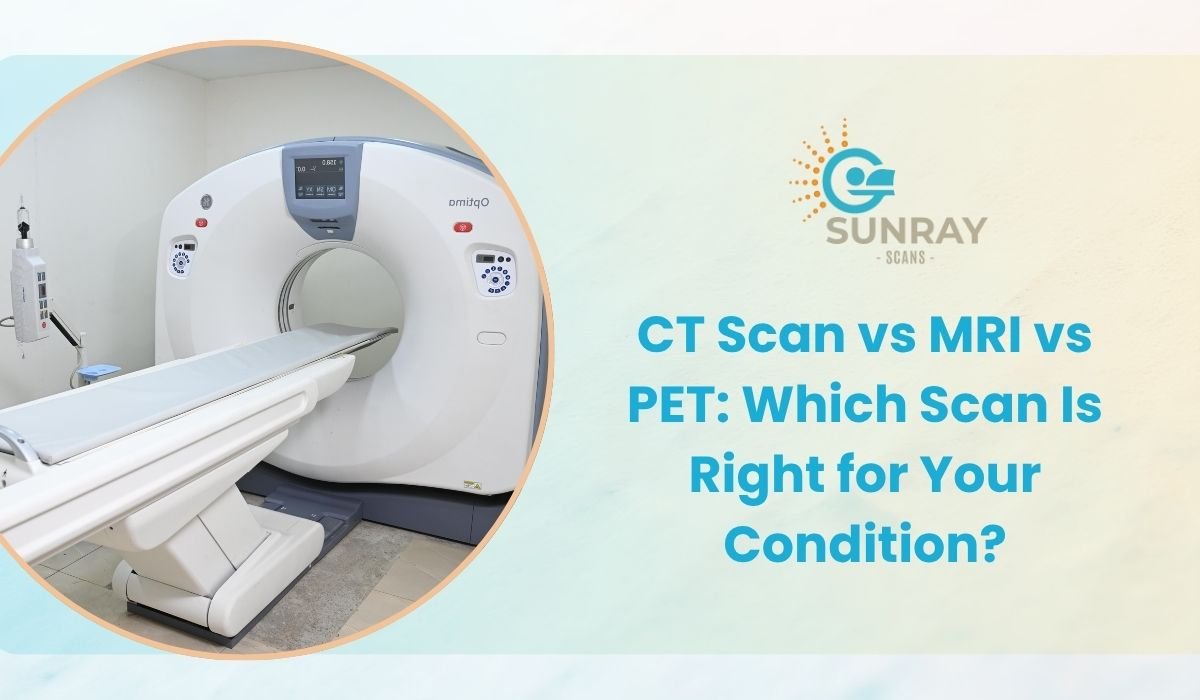
Medical imaging has revolutionized the way doctors diagnose and monitor diseases. Whether it’s detecting injuries, identifying tumors, or evaluating organ function, choosing the right scan plays a crucial role in accurate diagnosis and treatment planning. But with multiple options available, many patients often wonder: CT scan vs MRI vs PET – which is the best imaging test for my condition?
This comprehensive scan selection guide will help you understand the differences, benefits, and ideal uses of each imaging technique so you can make an informed decision.
Understanding the Basics of Medical Imaging
Before diving into comparisons, let’s briefly understand what each scan does:
- CT Scan (Computed Tomography): Uses X-rays to create detailed cross-sectional images of the body.
- MRI (Magnetic Resonance Imaging): Uses magnetic fields and radio waves to produce high-resolution images, especially of soft tissues.
- PET Scan (Positron Emission Tomography): Uses radioactive tracers to evaluate metabolic activity and detect abnormal cell function.
Each imaging method serves a unique purpose, and the choice depends on your symptoms, medical history, and the condition being evaluated.
CT Scan: Fast and Detailed Imaging for Emergencies
A CT scan is often the first choice in emergency situations because of its speed and accuracy.
When is a CT Scan Recommended?
- Head injuries and brain bleeding
- Fractures and bone injuries
- Lung infections like pneumonia
- Internal bleeding or trauma
- Detection of tumors or abnormalities
Advantages of CT Scan
- Quick and widely available
- Excellent for imaging bones and internal injuries
- Highly effective in emergency diagnosis
- Provides detailed cross-sectional images
Limitations
- Uses radiation
- Less effective for soft tissue compared to MRI
If you are looking for the Best CT Scan Center in Chennai, choosing a facility with advanced multi-slice CT technology ensures faster and more accurate results.
MRI Scan: Superior for Soft Tissue Evaluation
MRI is considered one of the best imaging tests for detailed visualization of soft tissues.
When is an MRI Recommended?
- Brain and spinal cord disorders
- Joint and ligament injuries
- Tumor detection and evaluation
- Heart and blood vessel conditions
- Muscle and nerve disorders
Advantages of MRI
- No radiation exposure
- Exceptional clarity for soft tissues
- Highly accurate for neurological conditions
- Ideal for long-term monitoring
Limitations
- Takes longer than CT scans
- Not suitable for patients with certain implants or pacemakers
- Can be expensive
Choosing the Top MRI Scan Center in Chennai ensures access to high-field MRI machines that provide clearer images and faster scan times.
PET Scan: Detecting Disease at the Cellular Level
A PET scan goes beyond structure—it shows how tissues and organs are functioning. This makes it especially useful in detecting diseases at an early stage.
PET Scan Usage
- Cancer detection and staging
- Monitoring response to cancer treatment
- Identifying recurrence of tumors
- Evaluating brain disorders like Alzheimer’s
- Assessing heart function and blood flow
Advantages of PET Scan
- Detects abnormalities before structural changes occur
- Helps in precise cancer diagnosis
- Provides functional imaging
- Often combined with CT (PET-CT) for better accuracy
Limitations
- Higher cost compared to CT and MRI
- Limited availability
- Involves radioactive tracers
PET scan usage is especially critical in oncology, where early detection and treatment monitoring can significantly improve outcomes.
CT Scan vs MRI vs PET: Key Differences
Here’s a simplified comparison to help you understand:
Feature | CT Scan | MRI | PET Scan |
Technology | X-rays | Magnetic fields | Radioactive tracers |
Best For | Bones, injuries | Soft tissues | Metabolic activity |
Time | Fast | Moderate | Longer |
Radiation | Yes | No | Yes (low level) |
Cost | Moderate | Higher | Highest |
Usage | Emergencies | Detailed diagnosis | Cancer & function analysis |
How to Choose the Best Imaging Test?
Selecting the right scan depends on several factors. Here’s a practical scan selection guide:
- Nature of the Problem
- Injury or trauma: CT scan
- Soft tissue or nerve issues: MRI
- Cancer or metabolic disorders: PET scan
- Urgency
- Emergency cases require quick imaging → CT scan is preferred
- Level of Detail Needed
- For highly detailed images of organs and tissues → MRI
- For functional insights → PET
- Medical History
- Patients with metal implants may not be suitable for MRI
- Radiation exposure concerns may influence CT or PET decisions
- Doctor’s Recommendation
Always follow your physician’s advice, as they determine the most suitable scan based on clinical evaluation.
Combining Scans for Better Diagnosis
In many cases, doctors use a combination of imaging techniques for accurate diagnosis:
- CT + PET (PET-CT): Common in cancer diagnosis
- MRI + PET: Used in neurological disorders
- CT + MRI: Provides both structural and soft tissue insights
This integrated approach ensures a more comprehensive understanding of the condition.
Why Choosing the Right Imaging Center Matters
No matter which scan you need, the quality of imaging and expertise of technicians play a vital role in diagnosis.
When searching for the Best CT Scan Center in Chennai or the Top MRI Scan Center in Chennai, consider:
- Advanced imaging technology
- Experienced radiologists
- Quick and accurate reporting
- Patient comfort and safety
- Affordable pricing
A well-equipped imaging center not only ensures precise diagnosis but also reduces the need for repeat scans.
Safety Considerations
While imaging tests are generally safe, it’s important to be aware of certain precautions:
- CT and PET scans: Involve radiation, so they should be used only when necessary
- MRI scans: Safe but may not be suitable for patients with metal implants
- Pregnant women: Should inform doctors before undergoing any scan
Always discuss risks and benefits with your healthcare provider.
Final Thoughts
When comparing CT scan vs MRI vs PET, there is no single “best” option for all situations. Each scan has its own strengths and is designed for specific medical needs.
- Choose CT scan for fast, emergency diagnosis
- Opt for MRI when detailed soft tissue imaging is required
- Go for PET scan when evaluating metabolic activity or cancer
Understanding these differences helps you make informed decisions and ensures you receive the most effective diagnostic care.
Conclusion
Medical imaging is a powerful tool in modern healthcare, but selecting the right test is essential for accurate diagnosis and treatment. By following this scan selection guide and consulting with your doctor, you can confidently choose the most suitable imaging option for your condition.
Whether you are considering a CT, MRI, or PET scan, always prioritize quality, expertise, and reliability when selecting an imaging center. This ensures better outcomes, faster diagnosis, and peace of mind for you and your loved ones.