

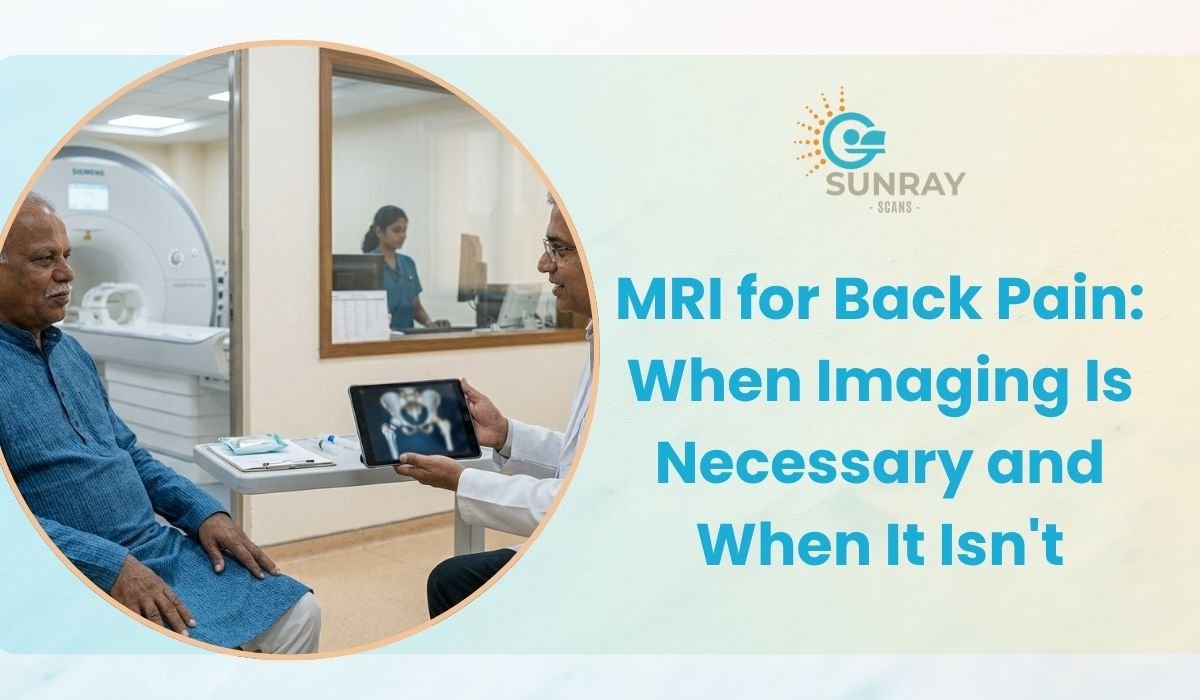
MRI for Back Pain: When Imaging Is Necessary and When It Isn’t
Almost everyone experiences back pain at some point in life. You bend down to pick up a dropped pen, carry a heavy grocery bag, or simply wake up after sleeping awkwardly, and suddenly a sharp, aching pain takes over your lower back.
In that uncomfortable moment, your first instinct is often to panic and request an immediate scan. You might think, “I need a scan right away to see what is broken inside.”
It is a completely logical thought. When we feel pain, we want proof, and an image seems like the fastest way to get answers. However, medical research shows that rushing to get a scan for everyday back pain is not always the best first step. In fact, getting a scan too early when it is not needed can sometimes lead to unnecessary stress and treatments that you do not actually require.
Understanding when a scan is truly necessary and when simple physical recovery is the smarter choice can save you time, worry, and expense. Let us look at how back pain works, when an MRI for back pain Chennai check is essential, and how to make the best choice for your spine health.
Why Back Pain Is So Common (and Tricky)
Your spine is a remarkable structure. It consists of interlocking bones called vertebrae, cushioned by rubbery pads called intervertebral discs, and supported by a complex network of muscles, ligaments, and nerves.
Because this network is so intricate, back pain can come from many different places:
- A strained muscle or overstretched ligament.
- A bulging or slipped disc pressing on a nerve.
- Wear and tear in the spinal joints (osteoarthritis).
- Poor posture and long hours sitting at a desk.
Here is the surprising truth that surprises many patients: pain intensity does not always match structural damage.
A severe muscle spasm can cause intense, agonizing pain that keeps you in bed for days, even though there is no structural damage to your bones or discs. On the flip side, many people walk around with bulging discs shown on scans without feeling a single drop of pain.
This is why doctors do not automatically order a scan the moment you mention a sore back.
When You DO NOT Need an MRI Right Away
If you wake up with sudden lower back pain after lifting something heavy or working in the garden, your instinct might be to look for a lower back pain scan. However, clinical guidelines generally advise against immediate imaging for uncomplicated back pain.
Simple Acute Back Pain
About 80 to 90 percent of back pain episodes are classified as “uncomplicated acute back pain.” This means the pain is caused by temporary muscle strains, minor ligament sprains, or inflammation.
In these cases, your body has an incredible ability to heal itself. With gentle movement, short-term pain relief, and basic physical therapy, most uncomplicated back pain improves significantly within two to four weeks.
The Problem with Unnecessary Scans
Why do doctors warn against unnecessary MRI scans during the first few weeks of simple back pain?
Because MRI machines are amazingly detailed, they catch every tiny imperfection in your spine. As we age, our spine naturally changes, much like getting gray hair or wrinkles on our skin. A high-resolution scan in a completely healthy 35-year-old might show a mild disc bulge or minor joint wear that has been there for years without causing any harm.
If you get a scan during a simple muscle strain, you might see that harmless disc bulge on the report and assume it is the cause of your pain. This can lead to unnecessary worry, avoided physical activities, or even aggressive treatments for a normal anatomical variation that would have resolved naturally on its own.
When Is a Spine MRI Truly Necessary?
While waiting it out works for simple strains, there are clear clinical situations where an MRI is the gold standard for getting answers.
An MRI uses strong magnetic fields and radio waves to create detailed, high-contrast images of soft tissues, nerve roots, spinal cords, and intervertebral discs. It provides clarity that standard X-rays simply cannot match.
Here are the key situations where you should definitely talk to your doctor about getting a scan:
1. Pain Lasting Longer Than 4 to 6 Weeks
If your back pain persists beyond six weeks despite conservative care, rest, and gentle physical therapy, it is time to look deeper. Chronic pain that refuses to settle down suggests an underlying structural issue that needs an MRI for back pain Chennai evaluation.
2. Suspected Slipped Disc or Sciatica
When an intervertebral disc bulges out of place, it can press against the sciatic nerve that runs from your lower back down through your legs. A slipped disc MRI is the most effective tool to confirm nerve compression.
Key signs of nerve compression include:
- Sharp, shooting pain radiating down one or both legs below the knee.
- Persistent numbness, tingling, or “pins and needles” in your feet or toes.
- Muscle weakness in your leg, foot, or ankle (such as struggling to lift your toes while walking).
3. Presence of “Red Flag” Symptoms
In a small percentage of cases, back pain can be a sign of a more serious underlying medical condition, such as an infection, a spinal fracture, or a tumor. Doctors look for specific warning signs called “red flags” that require immediate imaging:
- Sudden Bowel or Bladder Incontinence: Loss of control over your bowel or bladder, or numbness in your groin and saddle area. This can be a sign of Cauda Equina Syndrome, a medical emergency requiring urgent surgery.
- Unexplained Weight Loss or Night Sweats: Back pain accompanied by sudden, unintentional weight loss or fever.
- History of Cancer: New back pain in anyone with a personal history of cancer.
- Major Trauma: Back pain following a severe car accident, fall, or physical impact.
- Progressive Neurological Weakness: Rapidly worsening weakness in your legs that makes standing or walking difficult.
Knowing When to Get a Spine MRI: A Quick Guide
Symptom / Situation | Immediate MRI Needed? | Recommended Next Step |
Dull lower back ache after heavy lifting (< 2 weeks) | No | Rest, light walking, heat packs, simple pain management |
Pain radiating past the knee with numbness/tingling | Yes | Consult a physician for nerve evaluation and scan referral |
Back pain lasting longer than 4 to 6 weeks | Yes | Speak with your doctor about a detailed spine scan |
Back pain with sudden loss of bladder/bowel control | URGENT (Emergency) | Seek immediate emergency medical care |
Back pain with unexplained fever or weight loss | Yes | Immediate medical evaluation to rule out infection |
How to Prepare for Your Spine MRI
If your physician decides that an MRI is the right choice for you, preparing for your scan is simple and straightforward:
- Inform the Team About Metal: Because an MRI uses a powerful magnetic field, let the staff know if you have any surgical implants, metallic pins, or cardiac devices.
- Dress in Comfortable Clothes: Wear loose, comfortable cotton clothing without metal zippers, snaps, or metal buttons.
- Address Claustrophobia: If you feel uneasy in enclosed spaces, mention it when scheduling. Modern diagnostic centers offer spacious, high-comfort open MRI machines designed specifically to eliminate anxiety.
- Stay Still During the Scan: The scan usually takes between 15 and 30 minutes. Remaining as still as possible ensures the images come out completely sharp and clear.
What Happens During the Scan?
You will lie comfortably on a cushioned table that moves smoothly into the scanner. You will hear rhythmic tapping or humming noises as the magnetic coils work. The technician will give you earplugs or headphones with calming music, and you will hold a safety ball to contact the staff at any second if you need a quick break.
Finding the Right Spine Imaging Center in Chennai
When your doctor recommends a scan, choosing the right center makes all the difference in your diagnostic journey. You want a facility that offers advanced imaging clarity, fast turnaround times, and a patient-first environment.
For reliable, high-precision care, consider Sunray Scans, a leading spine imaging center Chennai residents depend on for quality diagnostics.
Located in Royapettah, Sunray Scans provides state-of-the-art MRI services, including comfortable open MRI options that cater to anxious or claustrophobic patients. Their experienced radiographers and radiologists ensure every scan is performed with high precision, delivering clean, reliable reports that help your doctor build an effective recovery plan.
Why Choose Sunray Scans?
- High-Resolution Imaging: Clear 3D views of your vertebrae, discs, and nerve pathways.
- Patient-Centered Comfort: Spacious equipment options that ease stress and eliminate claustrophobia.
- Fast, Reliable Reports: Quick report delivery so you can share results with your doctor without unnecessary delays.
- Affordable Quality: Transparent pricing that makes advanced diagnostic care accessible.
Back pain can be frustrating, but taking a calm, informed approach helps you avoid unnecessary testing while getting the exact care you need. Listen to your body, work closely with your physician, and choose a trusted imaging partner when it is time to look deeper.