
We tend to treat our bodies like old cars. When a strange little rattle starts under the hood, we turn up the radio. We ignore the squeak, telling ourselves, “I’ll look into it when I have more time,” or “It’s probably just stress.”
But when the “rattle” is happening inside your head, ignoring it is not an option.
Your brain is the command center for everything you think, feel, and do. Because we cannot see what is going on under the skull, it is incredibly easy to make excuses for early warning signs. A nagging ache becomes “just a tension headache.” A sudden wave of dizziness gets blamed on “skipping breakfast.”
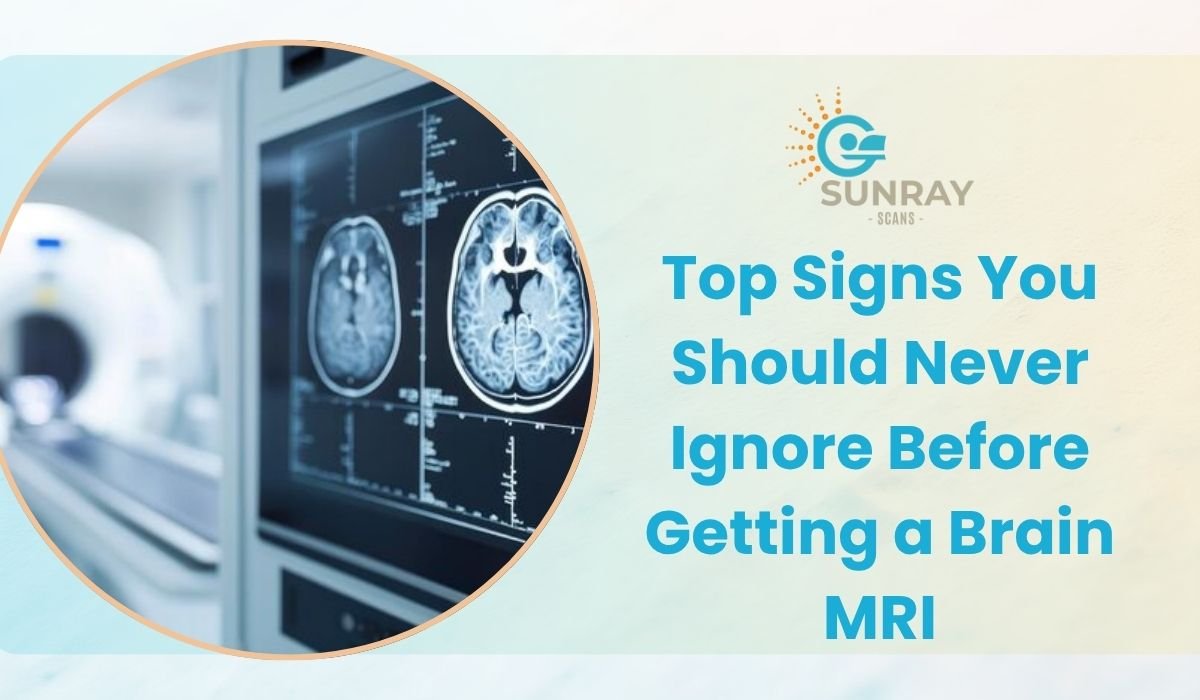
Sometimes, your body stops whispering and starts dropping unmistakable hints that it needs a closer look. This is where advanced neurological imaging comes into play. A brain MRI scan (Magnetic Resonance Imaging) provides doctors with a highly detailed, safe, and clear look at the soft tissues of your brain without using any radiation. It easily maps out blood vessels, nerves, and structures to find exactly what is wrong.
If you or a loved one are experiencing any of the following symptoms, it is time to stop second-guessing. These are the top signs you should never ignore before getting an MRI brain examination to secure your long-term brain health.
The “Thunderclap” Headache (And Other Red Flags)
Most of us know what a headache feels like. Whether it comes from not drinking enough water, staring at a phone screen for hours, or everyday stress, a mild throb is usually easy to handle. However, certain types of head pain need a doctor’s attention right away.
Medical professionals use the term headache diagnosis to figure out pain patterns that are dangerous. The most alarming of these is called a “thunderclap headache.”
- What it feels like: This is not a slow-building ache. It is a sudden, blinding, and severe pain that peaks within just 60 seconds. Patients often describe it as “the worst headache of my life.”
- Why it’s a warning sign: A sudden explosion of pain can be a sign of bleeding around the brain or a weak blood vessel that has burst.
Even if your headache is not a sudden explosion, you should consider a brain MRI scan if your regular headaches suddenly change. If you are over the age of 50 and starting to get headaches for the first time, or if your regular migraines suddenly become much more intense and do not respond to medicine, your brain is sending a warning signal.
Sudden Changes in Vision or Speech
Your eyes and your speech are directly wired into complex regions of your brain. When those communication paths are blocked or disrupted, the symptoms show up instantly.
Visual Disturbances
If you experience sudden double vision, unexplained blurring, or a partial loss of sight (like a dark curtain falling over one eye), do not just head to an eye doctor. You need a medical checkup where a specialist can order an MRI brain scan. These issues can happen when there is pressure on the optic nerve caused by swelling or inflammation.
Speech Difficulties
Slurring your words, suddenly struggling to find basic vocabulary, or finding it hard to understand what others are saying are major warning signs. These quick mental glitches usually point to a sudden drop in blood flow or swelling within the brain’s language centers.
Unexplained Numbness or Weakness on One Side
Imagine holding your morning cup of coffee, and suddenly your hand simply refuses to grip. Or perhaps you notice that the left side of your face feels completely numb, as if a dentist’s injection has not worn off.
This one-sided weakness or numbness is a classic sign of nervous system distress.
[Brain Area Under Stress] ──> [Disrupted Nerve Signal] ──> [One-Sided Body Weakness]
When a nerve pathway is squeezed or damaged inside the brain, the physical symptoms almost always show up on the opposite side of the body. This happens because our nerve fibers cross over on their way down. A brain MRI scan can rapidly locate the exact site of the problem, helping doctors see if it is a nerve issue, a condition like Multiple Sclerosis (MS), or an active stroke.
Chronic Dizziness, Vertigo, or Loss of Balance
We all lose our footing occasionally. But if the world feels like it is constantly spinning, or if you find yourself veering to one side while walking down a straight hallway, your balance system is struggling.
Your balance relies on a delicate conversation between your inner ear, your eyes, and your cerebellum (the back part of your brain that controls movement). Persistent vertigo or a newly clumsy walk can mean this area is under pressure.
Through targeted neurological imaging, specialists can rule out structural issues or benign (non-cancerous) growths on the nerves that disrupt your balance.
Cognitive Decline and Uncharacteristic Personality Shifts
It is normal to forget where you left your car keys every once in a while. It is not normal to suddenly forget how to drive home from a grocery store you have visited weekly for years.
When memory changes or personality shifts happen quickly, it is not just a normal part of getting older. Keep an eye out for:
- Severe memory gaps that impact daily work and life.
- Sudden, unusual bouts of anger, confusion, or deep sadness in someone who is normally cheerful.
- An inability to process simple logic or follow basic, everyday instructions.
An Advanced look via an MRI brain provides a clear picture to help doctors pinpoint exactly what is causing the mental fog, allowing for early and accurate care.
The Warning Signs Checklist
If you or a loved one experiences any of these symptoms, do not wait. Speak to a doctor about a brain scan:
- Headaches that wake you up from a sound sleep.
- Sudden muscle twitching or unexplained seizures.
- Persistent ringing in the ears accompanied by hearing loss.
- Loss of fine motor skills (like struggling to button a shirt).
The Need for Urgent Stroke Screening
When it comes to a stroke, every single second matters. Recognizing the warning signs early can mean the difference between a full recovery and long-term disability.
The medical community uses an easy acronym called F.A.S.T. to help people spot an evolving stroke:
Letter | Sign | What to Look For |
F | Face Drooping | One side of the face sags or feels numb when trying to smile. |
A | Arm Weakness | One arm drifts downward when both are raised. |
S | Speech Difficulty | Words sound slurred, garbled, or hard to understand. |
T | Time to Act | Seek emergency medical help immediately if these appear. |
Even if these symptoms disappear within a few minutes, you still need to be checked. You may have experienced a mini-stroke (also called a TIA). A mini-stroke is a profound warning shot that a major stroke could be on the horizon. Urgent stroke screening involving a specialized brain MRI scan can detect tiny patches of blood flow issues in the brain within minutes, allowing doctors to act fast.
No More Fear: The Power of an Open MRI
For many people, the biggest reason they avoid getting a necessary brain MRI scan is fear. Traditional MRI machines look like tight, narrow tunnels. If you struggle with claustrophobia (the fear of small, enclosed spaces), the idea of lying perfectly still inside a loud tube for 30 minutes can feel terrifying.
Thankfully, medical technology has evolved to put your comfort first.
An Open MRI completely removes the claustrophobic tunnel design. Instead of a closed tube, the machine features an open, spacious design that allows you to look out into the room throughout the entire process. It is completely open on the sides, making it an ideal choice for:
- People who feel anxious or trapped in small spaces.
- Seniors who need extra comfort and room to move.
- Children who feel safer seeing their parents nearby during the scan.
- Larger or bariatric patients who need a more spacious setup.
An Open MRI gives doctors the exact same high-precision, crystal-clear images needed for an accurate diagnosis, but with none of the stress, confinement, or fear.
Taking Proactive Control of Your Health in Chennai
If you have been experiencing subtle, lingering issues, being proactive is the best gift you can give yourself. Waiting for a symptom to become unbearable only makes recovery harder.
If you are looking for a highly trusted, advanced diagnostic center to schedule your scan, look no further than Sunray Scans. They proudly introduced Chennai’s first-ever High-Resolution Open MRI system.
Located in Royapettah, Sunray Scans combines cutting-edge technology with affordable pricing and same-day reports for most scans. Their Open MRI features silent operation and specialized coil technology, ensuring exceptional image clarity in a completely stress-free environment.
Don’t ignore the warning signs. Listen to your body, talk to your doctor, and experience a comfortable, clear path to peace of mind.