

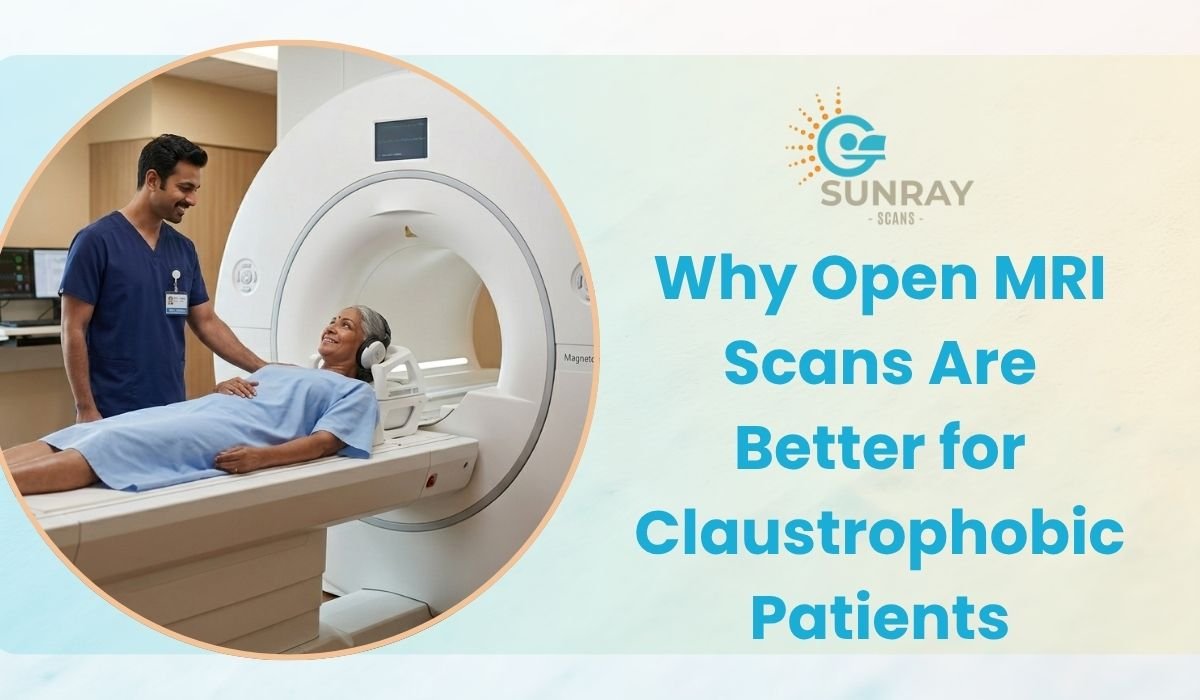
Imagine standing in front of an elevator. The doors open, and you notice it is barely wide enough for two people to stand side by side. The ceiling feels low and the air feels trapped. For most people, stepping inside is a normal, everyday action. But if you have a fear of tight spaces, a scene like this can trigger a cold sweat, a fast heartbeat, and a strong urge to run away.
Now, take that exact feeling and make it worse. Imagine being asked to lie perfectly still on a narrow plastic bed, which is then slid deep into a tight, dark, long tube that sits right in front of your nose. On top of that, you are told you cannot move a single muscle for forty-five minutes while the machine makes loud, metallic banging noises.
For a long time, this was exactly what a standard Magnetic Resonance Imaging (MRI) scan felt like.
Medical testing is already stressful when you are dealing with unexplained pain or injuries. Adding severe fear into the mix makes it even harder to get medical help. Many people delay important doctor visits simply because they are afraid of the machine itself.
Fortunately, modern medical engineering has listened to patients. The introduction of the open MRI scan has completely changed the way we take medical pictures. It offers a kind, highly effective choice that protects your peace of mind while capturing the vital data your doctors need.
If you or a family member dreads the idea of a traditional diagnostic machine, let us explore why an open setup is the best choice for your health and emotional comfort.
Understanding the Fear of Tight Spaces in Healthcare
The fear of small spaces is not just a mild dislike or a passing feeling of being uncomfortable. It is a real anxiety response where the brain senses danger when there is none.
When a person with this fear enters a tight space, their body goes into a full emergency mode. The body releases a rush of adrenaline, triggering real, distressing physical symptoms:
- Fast heartbeats and chest tightness
- Breathing too quickly or feeling like you cannot catch your breath
- Heavy sweating, shaking, and dizziness
- A strong panic attack that makes it hard to stay still
In a traditional closed MRI machine, these triggers are strong. The inner tunnel usually measures only about 60 centimeters across. Because the inner walls are so close, patients often feel like the ceiling is pressing down on them.
Furthermore, to get clear images, the patient must remain completely motionless. Any movement blurs the scan, which means the test has to start over. For a panicked patient, the pressure to stay perfectly still only makes their anxiety worse, creating a frustrating loop that often leads to stopped scans, wasted time, and delayed medical care.
[Closed Tunnel System] ──> [Triggers Panic Response] ──> [Involuntary Body Movement] ──> [Blurred Scan or Aborted Test]
What Exactly is an Open MRI Scan?
To understand why an open system feels so entirely different, it helps to look at how MRI technology has improved over the years.
Every MRI scanner uses powerful magnets and radio waves to create highly detailed pictures of your body’s soft tissues (like muscles, ligaments, nerves, and organs) without using harmful X-ray radiation.
The Closed System Setup
A traditional closed system looks like a long, hollow doughnut. The magnet completely surrounds your body. This requires you to go deep inside the central hole so the magnetic field can look at your tissues.
The Open System Setup
An open scanner completely changes this shape. Instead of a fully enclosed tube, it uses a sandwich design. It features a top magnetic plate and a bottom magnetic plate, held apart by strong structural pillars.
This means the machine is completely open on the sides. While you lie down on the comfortable scanning bed, you are never enclosed. There is no dark tunnel, no wall pressing down right in front of your face, and no sense of being trapped. You can freely look out into the room, see the medical staff at the desk, and breathe fresh, moving air.
5 Major Reasons Open MRI Scans Win on Patient Comfort
Choosing an open scanning option provides clear physical and emotional benefits that make the medical test simple and easy.
Massive Reduction in Anxiety
The most obvious benefit of an open scanner is space. By removing the enclosed tube, your side vision remains completely clear. If you look to your left or right, you see the open room rather than a hard plastic wall. This simple visual freedom stops the brain from panicking, keeping your heart rate steady and helping you stay calm from start to finish.
Side-by-Side Support from Loved Ones
In a standard closed system, you are completely alone inside the tube. While the staff can speak to you through a speaker, you are physically cut off from human touch.
Because an open system leaves the sides completely exposed, a spouse, family member, or friend can stand right next to the machine. They can hold your hand, talk to you, or simply stay where you can see them throughout the test. This direct support is a major help for anxious adults, seniors, and frightened children who need to know they are safe.
Clear Views and Natural Airflow
Closed tunnels can easily feel warm, stuffy, and dark, which makes the feeling of being trapped feel worse. Open units feature excellent air movement because room air passes across the patient naturally. Additionally, because you can look out into the scanning room, you keep your sense of direction and control. This reduces the helpless feeling that triggers panic.
Room for All Body Types
Traditional scanners present physical limits, not just emotional ones. Larger individuals, bariatric patients, or people with exceptionally broad shoulders often find it physically painful or impossible to fit comfortably inside a standard closed tube. An open scanner eliminates these narrow boundaries, offering a spacious, comfortable layout that welcomes all body shapes with dignity and ease.
Quieter Operation for a Calmer Environment
If you have ever had a traditional scan, you know the noise can be scary. The loud clanging and thumping sounds happen when the internal parts of the machine move quickly. Because open systems use different magnetic designs, they operate with a much lower noise level. The softer, gentler hum makes it much easier to relax, listen to music, or simply rest during the procedure.
A Detailed Look: Closed Bore vs. Open MRI
Feature | Closed Bore MRI | Open MRI Scan |
Physical Shape | Long, enclosed round tube | Two flat plates with open sides |
Patient Experience | Can feel highly confining | Airy, spacious, and relaxed |
Anxiety Levels | Higher risk of panic or fear | Exceptional patient comfort MRI experience |
Companion Access | Loved ones must stand far away | Family can stand close and hold your hand |
Noise Profile | Very loud, rhythmic clanging noises | Softer, significantly quieter operation |
Fit and Accessibility | Tight for broader or larger patients | Readily accommodates all body types easily |
The Facts About Image Clarity
In the early days of open scanners, some doctors worried about image sharpness. The very first open machines used lower-strength magnets, which occasionally produced less detailed images compared to the high-field closed tunnels.
However, modern advanced imaging systems have completely solved that problem.
Thanks to big steps forward in MRI technology, today’s open systems use advanced software and high-quality parts to capture crystal-clear, highly detailed medical pictures. Whether your doctor is checking for a sports injury in your knee, looking for a pinched nerve in your spine, or examining soft tissues, a modern open scan provides the clean details needed for an accurate medical plan.
[Modern Open MRI Software] + [Advanced Body Coils] ──> High-Resolution Medical Images
Practical Tips for Managing Scan Anxiety
Even when choosing an open system, it is perfectly normal to feel a little nervous before your appointment. Here are a few practical steps to ensure your session goes smoothly:
- Speak Up Early: When booking your appointment, let the staff know that you have a fear of tight spaces. They will note it down and give you extra time so you never feel rushed.
- Take a Quick Tour: If possible, visit the center a day before or ask the staff to show you the machine before you lie down. Seeing the physical space ahead of time removes the fear of the unknown.
- Focus on Your Breathing: Use simple breathing exercises, like breathing in slowly for 4 seconds, holding for 4 seconds, and breathing out for 4 seconds, to keep your body in a restful state.
- Dress Comfortably: Wear loose, warm clothing without metal zippers, snaps, or buttons. Feeling physically comfortable helps you stay relaxed while remaining still.
Extra Help: The Safety Squeeze Ball
Even in an open system, the staff will place a small rubber squeeze ball in your hand. This is your direct link to help. If you feel uncomfortable at any moment, simply squeeze the ball. The system stops right away, and the team will step in to help you. Knowing you hold total control over the process is a great tool for lowering anxiety.
Discover Stress-Free Diagnostics in Chennai
If you live in or around Tamil Nadu and have been delaying a necessary scan due to fear, you no longer have to risk your health. You can find world-class care designed specifically around your peace of mind close to home.
For a comfortable experience, look no further than Sunray Scans, a premier scan center Chennai residents trust for kind medical care.
Sunray Scans made history by introducing Chennai’s very first High-Resolution Open MRI system at their modern facility in Royapettah. By combining advanced imaging technology with a focus on patient comfort, they have completely removed the stress, noise, and tight spaces of traditional testing.
Why Choose Sunray Scans?
- True Open Design: Enjoy an open-sided scanning process that provides comfort and peace of mind.
- Silent Technology: Experience a quieter, calmer environment that reduces noise stress.
- Fast Reporting: Benefit from quick, highly accurate evaluations by experienced doctors so you can start treatment without delay.
- Affordable Quality: Access high-quality diagnostic care at clear, fair prices.
Your health is too important to put on hold. By choosing an open imaging path, you can leave behind the fear of tight spaces and focus entirely on what matters most: getting accurate answers and feeling better.